Home › Chilli Growing Guide › Chapter 8
Troubleshooting Chilli Plant Problems
When a chilli plant looks unhappy, the temptation is to reach for a product. In most cases, a calm, methodical check of the growing environment is far more effective.
KEY FACTS
Purple colouring: often a sign of cold roots
Upward leaf curl: may mean heat or water stress
Leggy seedlings: usually need more light
Golden rule: change one thing at a time and record the result
1. A method for diagnosing problems
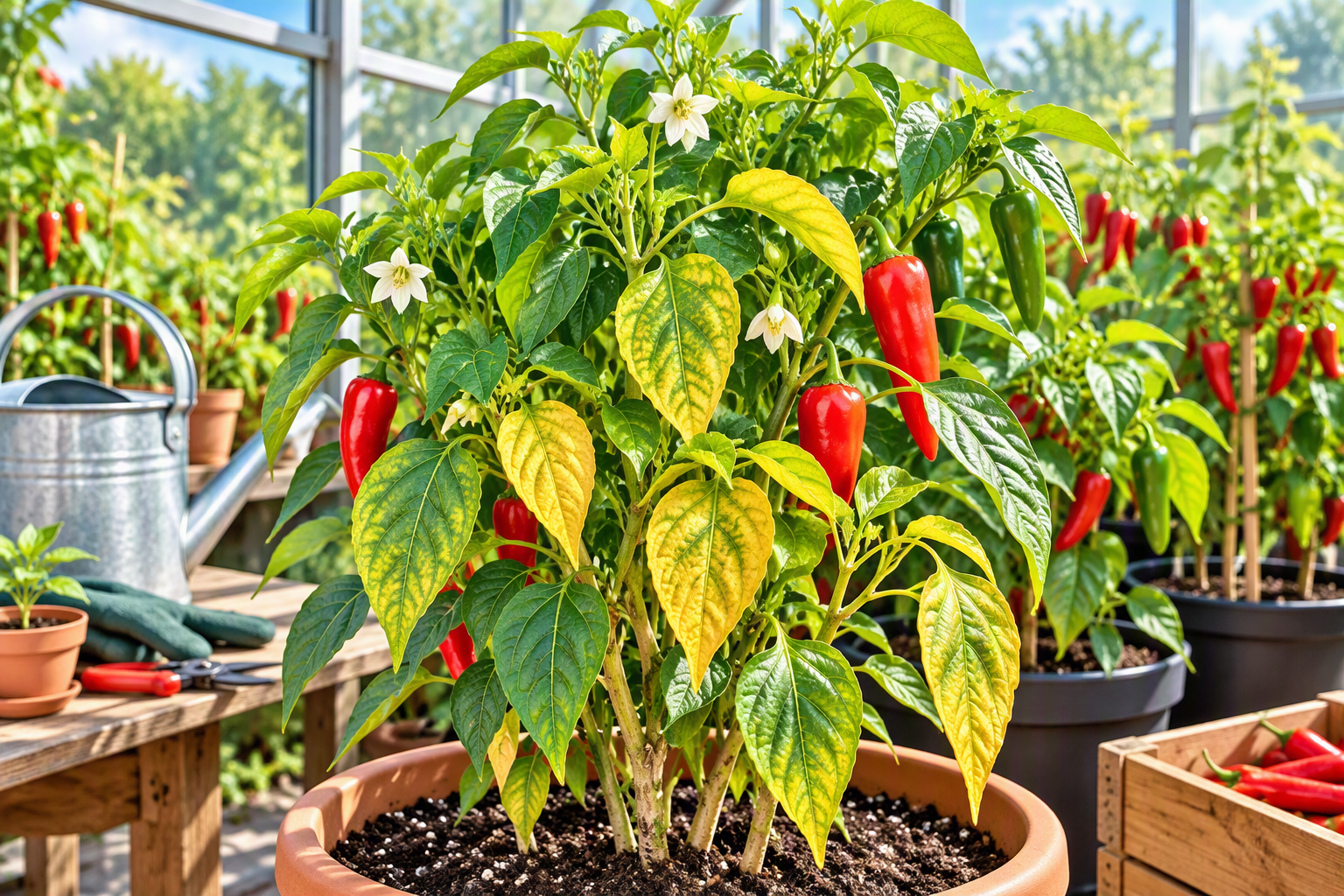
Start by identifying which part of the plant is affected and comparing old growth with new. Review any recent changes in watering, feeding, potting and weather, inspect the roots and look for pests. Then change one factor at a time and record the result, so you know what actually made the difference.
2. Common symptoms and pests
Some symptoms are common. Yellow lower leaves may reflect age, excess water or a shortage of nitrogen. Purple colouring often accompanies cold roots, upward leaf curl may indicate heat or water stress, and leggy seedlings usually need more light.
Aphids, whitefly, spider mites and fungus gnats all demand early identification. Oedema often reflects excessive water uptake in cool, humid conditions, and damping off is best prevented with hygiene, airflow and restrained watering.
Use the table below to match what you see with its most likely cause, and always address environmental factors before reaching for a treatment.
| Symptom | Probable cause | Recommended action |
|---|---|---|
| Leggy, spindly seedlings | Not enough light | Lower grow lights (10–15 cm above the leaves for fluorescent tubes) or move to a brighter spot. |
| Damping off (seedlings collapse at the base) | Fungal attack in soggy compost | Improve airflow, avoid overwatering and water with dilute, cooled chamomile tea. |
| Yellow lower leaves | Overwatering or nitrogen deficiency | Let the top of the compost dry out between waterings; apply a balanced feed. |
| Purple or dark leaves | Cold roots or phosphorus deficiency | Warm the root zone; feed with a higher-phosphorus fertiliser or bone meal. |
| Yellowing between the leaf veins | Magnesium deficiency | Spray the leaves with an Epsom salts solution (1 tsp per litre of water). |
| Dark, sunken patches at the tips of pods | Blossom end rot (calcium shortage, often linked to irregular watering) | Water consistently; add a calcium or Cal-Mag supplement. |
| White powdery spots on leaves | Powdery mildew (poor air movement) | Space plants out and improve ventilation; if needed, use a fungicide approved for edible crops, following the label. |
| Clusters of soft bugs on shoots | Aphids or whitefly | Spray with insecticidal soap or introduce biological controls such as ladybirds or lacewings; yellow sticky traps help with whitefly. |
| Fine webbing under leaves | Spider mites | Raise humidity, wash leaves with water sprays, or introduce the predatory mite Phytoseiulus persimilis (see RHS advice on glasshouse red spider mite). |
| Tiny dark flies around the compost | Fungus gnats | Let the top of the compost dry out completely; use yellow sticky traps and nematode biological controls. |
Pesticides and the law. In the UK, only use pest and disease treatments that are approved for the edible crop you are treating, and always follow the label. Neem oil is not approved as a pesticide in the UK, so it is not recommended here. The RHS guide to biological control in the home garden explains the natural alternatives.
3. When a plant declines suddenly
Emergency reset. Stop feeding, assess the moisture level, inspect the roots, check the temperature and look for pests. Correcting the environment is usually more effective than adding another product.
The table below summarises what each stage of growth needs most and the risks to watch for.
| Stage | Priority | Common risk |
|---|---|---|
| Germination | Warmth, moisture and oxygen | Cold, saturation and poor hygiene |
| Seedling | Compact growth and strong roots | Low light and overwatering |
| Vegetative | Branches, leaves and root volume | Root restriction and excess nitrogen |
| Flowering | Stable environment and pollination | Heat, cold and irregular watering |
| Fruiting | Consistent moisture and balanced feed | Drought cycles and overloaded branches |
| Ripening | Warmth, light and time | Late flowers and falling temperatures |
CHAPTER CHECKLIST
- Observe first.
- Change one variable at a time.
- Record the result on your Chilli Grower’s Record Sheet.