Home › Chilli Growing Guide › Chapter 5
Feeding, Pollinating and Ripening Chillies
Once plants are settled in their final containers, the focus shifts to feeding them well, getting flowers to set fruit and ripening pods before the British autumn closes in.
IN THIS CHAPTER
KEY FACTS
Seedlings: weak balanced feed every 10–14 days once true leaves appear
From fruit set: switch to a high-potassium feed
Pollinating: tap stems or use a soft brush, late morning to early afternoon
Late season: remove very late flowers to ripen existing pods
Flower drop: often above 35°C or below 12°C
1. Nutrition and feeding
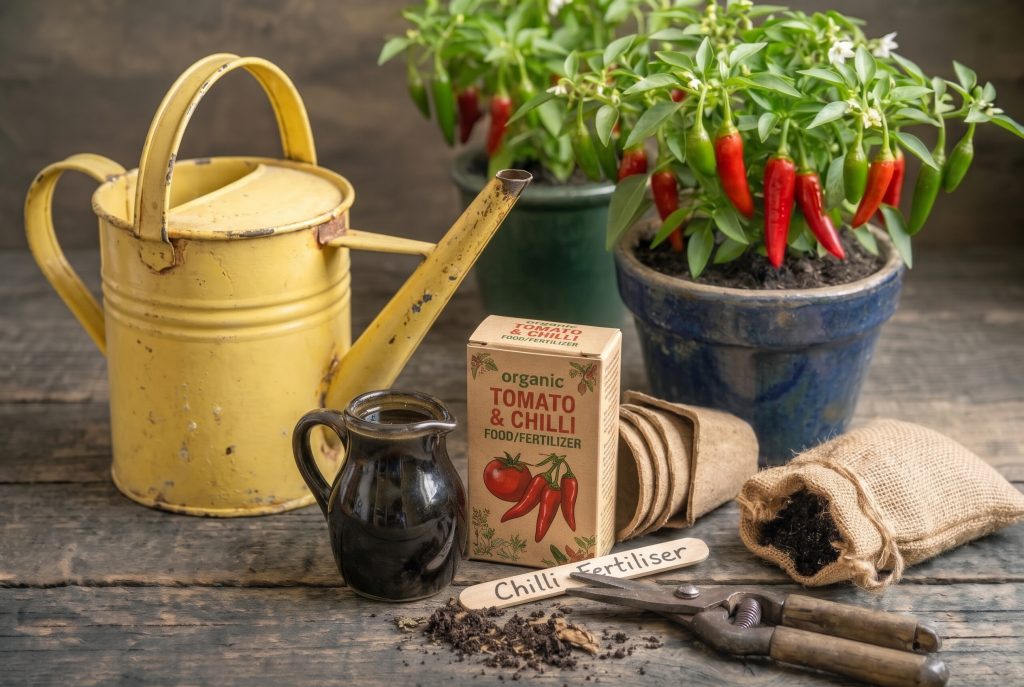
Nitrogen supports foliage, phosphorus contributes to energy transfer and roots, and potassium is important for water regulation and fruiting. Calcium, magnesium, sulphur and trace elements are also essential. Feed according to the plant’s stage: seedlings need little feed, vegetative plants need balanced nutrition, and from flowering onward potassium demand rises. Fresh compost often contains enough nutrition for an initial water-only establishment period.
| Stage | What to feed | Example |
|---|---|---|
| Seedling | No feed at first. Once true leaves appear, a weak balanced feed every 10–14 days. | A half-strength balanced or chilli feed, such as Chilli Focus |
| Vegetative growth | A higher-nitrogen feed to build a strong, leafy branch framework. | A high-nitrogen soluble feed (around 20-10-10), such as Chempak No. 2 |
| Flowering | A balanced feed as buds form. Some growers use a higher-phosphorus bloom feed at this stage, but potassium demand is already rising. | A balanced or bloom feed, such as Elixir Gardens Bumper Crop |
| Fruiting | From fruit set, a high-potassium feed to swell pods, boost flavour and ripen fruit. | A high-potash feed, such as Chempak No. 4 or a tomato feed |
Potassium is the nutrient that matters most once pods begin to form. Supplement with calcium and magnesium, using a Cal-Mag product or Epsom salts for magnesium, to help prevent blossom end rot and yellowing between the leaf veins. Product names are examples only, not endorsements; check each label’s N-P-K and always follow its rates. Logging each feed on the Chilli Grower’s Record Sheet makes it easy to see what worked best for your plants.
Introduce liquid feed at low strength and increase it only if growth and flowering justify it. Never apply strong feed to bone-dry compost, and always let product labels take precedence over general schedules.
Diagnose before you dose. Yellowing, scorch and curling can also come from water, cold, root damage or pests, so check the growing environment before adding fertiliser.
CHAPTER CHECKLIST
- Feed for the plant’s growth stage.
- Use label rates.
- Diagnose environmental causes before adding fertiliser.
2. Flowering, pollination and fruit set

Most chilli flowers contain both pollen-producing anthers and a receptive stigma, so they are capable of self-pollination, and movement from wind, insects or the grower improves pollen transfer. In a greenhouse or indoors, natural wind and pollinators are limited, so give the stems a gentle tap daily, provide light airflow or sweep a soft paintbrush inside the open flowers. Late morning, when the pollen is dry and floating, is usually the best time.
Flower drop usually follows severe heat spikes above 35°C, cold snaps below 12°C, irregular watering, excess nitrogen or poor pollination. Some loss is natural, so look for persistent patterns rather than reacting to a single dropped bloom. Once pods set, add canes or soft ties before branches become overloaded, and maintain stable watering and balanced feed rather than forcing rapid growth.
3. Fruiting and ripening
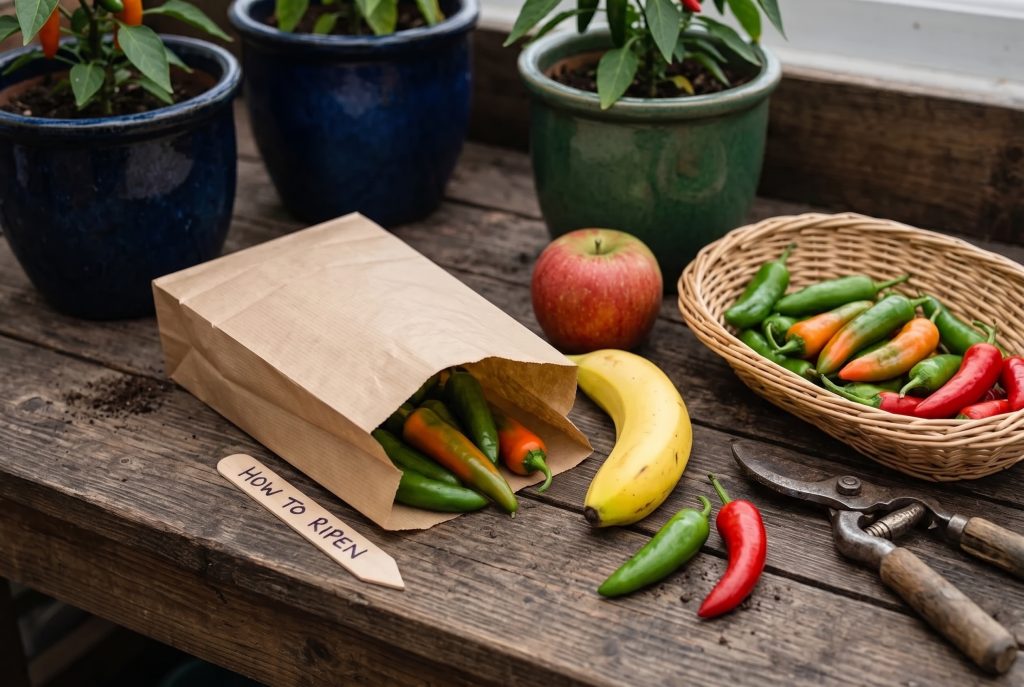
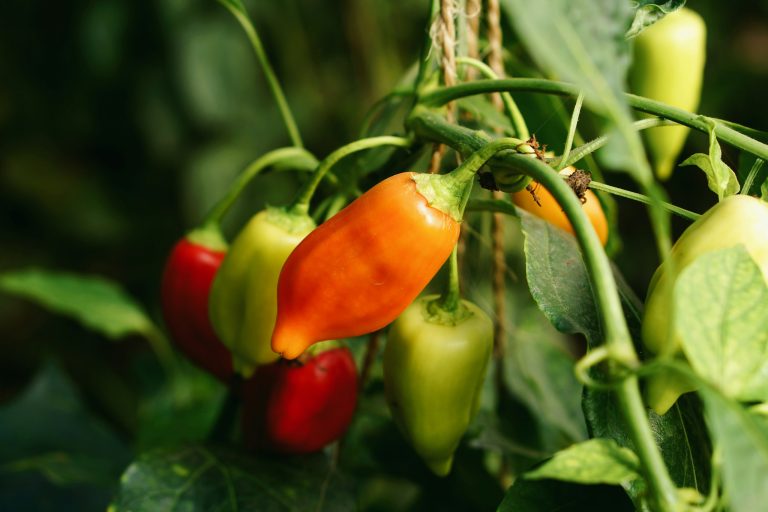
After pollination the petals fall, the ovary swells, the pod expands and the seeds mature before the final colour develops, so full size does not necessarily mean full ripeness. Stable moisture, warm roots, good light and adequate potassium, calcium and magnesium all support fruit expansion, while repeated cycles of drought and heavy watering reduce quality.
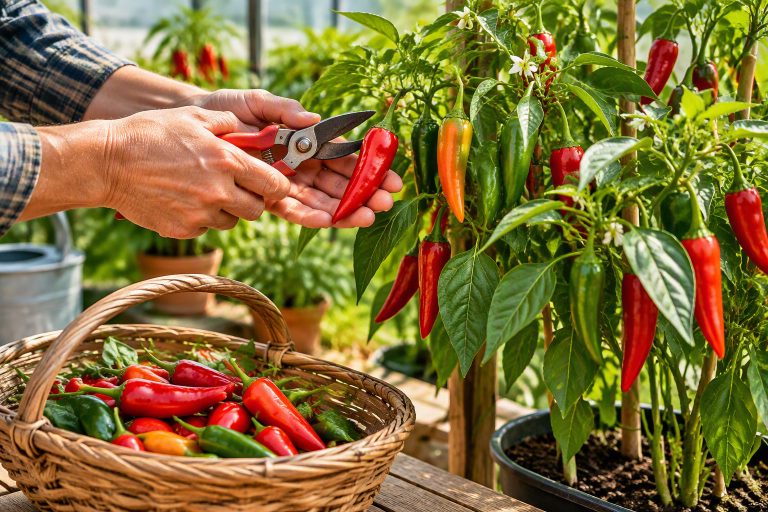
To ripen pods in Britain, move pots to warm, bright positions and use protected spaces late in the season. Remove very late flowers so the plant can direct its resources to the pods already established. A pod is fully mature when it reaches its target final colour (red, orange, yellow or chocolate), feels firm to a gentle squeeze and shows a waxy sheen. Green Jalapeños, Serranos and Padróns have a valid culinary role, but full sweetness, aroma and peak heat develop when pods ripen fully on the plant, so harvest according to how you intend to use them.